Dr. Arnab Karmakar
For Surgery Related Query: +91 9830491377 | For Appointment: +91 8240136591
Dr Arnab Karmakar

What is Orthopedic Trauma: Symptoms, Causes, Diagnosis, and Treatment Definition and Overview?

Orthopedic trauma is a broad term describing all kinds of injuries affecting the bones, joints, muscles, tendons, and ligaments in any part of the body that are caused by trauma. The term is wide-ranging and may refer to minor fractures or severely broken bones with a direct threat to the patient’s life. It is considered as a sub-specialty of orthopaedic surgery and is focused on treating fractured bones and making sure the injured part of the body regains its original strength and maximum function it used to have prior to the injury.

More About Fractures & Trauma Care

Cause of Condition

The many different types of orthopedic trauma are classified based on the affected body part.

Upper extremity injury, which includes a broken arm or wrist, collarbone, or ribs

Lower extremity injury, which includes a broken ankle, hip, or legs

Soft tissue injury, which affects the muscles, tendon, and ligaments

The most common causes of traumatic injuries are:

Falls

Twisting the ankle

Sporting accidents

Other types of accident

Severe coughing

Blows to specific parts of the body

Some people also have a greater propensity to broken bones after a fall or accident. For example, a person suffering from osteoporosis, a condition wherein the person’s bones are weak and fragile, can easily break a bone even with a minor fall or slip. Some people may also suffer from conditions that affect their eyesight or their balance, causing them to fall more frequently and raising their risk of injury.

Additionally, bones do not always break the same way. The break can occur in a straight line, diagonally, or in a spiral manner. Bones can also break into several pieces and, in open fractures, they may stick out of the skin.

Key Symptoms

Trauma to the bones and soft tissues that fall under orthopedic care may be accompanied by several possible symptoms, depending on which part of the body is affected. The most common symptoms of a broken limb or body part include:

Swelling

Tenderness

Bleeding, but only if the break in the bone damages the skin

Major bruising

Inability to move the affected part without experiencing pain

Bone sticking out at an abnormal angle

Bone sticking out of the skin

Numbness

A pins and needles sensation if some nerves are injured

Inability to lift or rotate the injured part

Inability to put any weight (for leg injuries)

Severe pain when breathing in (for broken ribs)

Shallow breathing

A grinding, cracking, or snapping noise is heard at the time of the fall or accident

Minor injuries are sometimes difficult to treat, as there are cases where there’s no sign of a broken bone. Thus, patients don’t go straight to the emergency room. However, it is best to get checked up after a fall or accident to make sure there are no fractures.

Regardless of the severity of the injury, during the ride to the hospital, it is important to keep the injured body part stable by using temporary slings. Meanwhile, applying an ice pack to the injured area will help reduce the pain and inflammation. If the pain is unbearable, over-the-counter pain relievers may be taken; some examples are paracetamol and ibuprofen. If there is nobody to drive the patient to the hospital, it is best to call for an ambulance. If there is a bone sticking out at an odd angle, no attempt should be made to re-align it. If there is an open wound, it should be covered with a clean cloth and pressure must be applied to minimize the bleeding.
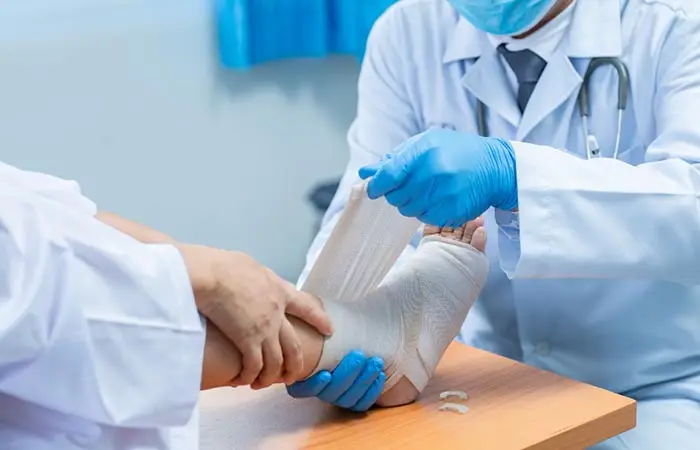
Orthopedic trauma is treated depending on its severity. Those who have minor injuries such as fractures can be easily treated by general orthopedists, although in some cases, the expertise of fracture specialists may become necessary. However, some types of trauma such as multiple broken bones and fractures in sensitive locations such as near the joints or affecting the pelvis may require trauma specialists.

Orthopedic trauma uses both surgical and non-surgical techniques to treat the affected bones and soft tissues. Minor fractures and dislocations of specific bones such as the scapula, humerus, and clavicle, among others, can be treated non-surgically through an external fixation method. This means that orthopedic devices such as casts, braces, and splints are placed outside the body to keep the injured part stable during the recovery period.

Surgical means, on the other hand, include:

Minimally invasive surgery

Conventional surgery

Internal fixation method, which refers to surgically installing orthopedic devices on the bone itself

The following procedures are reserved for more severe injuries and may be done either conventionally or through minimally invasive techniques.

Bone grafting and bone/joint transplantation

Bone-forming

Limb lengthening

Lower limb joint reconstruction, such as hip and knee replacements

Upper extremity reconstruction

Soft tissue repair

Orthopedic trauma is usually followed by a long recovery period, depending on the severity of the injury and the affected body part. The shortest recovery period is usually three weeks for minor injuries. Arm or wrist injuries, as well as a fractured collarbone, may take 6 to 8 weeks to heal, while ankle injuries may take up to 6 weeks.

There are also cases in which the bone fails to heal, leaving a permanent injury. However, the healing time tend to be shorter in children, whose bones heal more quickly. Most patients recovering from orthopedic trauma are advised to undergo a post-treatment program to avoid joint or muscle atrophy, which may occur as a result of long periods of inactivity.

Among all types of orthopedic trauma, one of the longest to heal is a broken hip, which is especially dangerous for the elderly. Many individuals find it difficult to regain their original condition after suffering a fracture in the hip bone, and studies show that there is a 1 out of 3 fatality rate within 12 months post-injury among people who experience hip fractures; in many cases, the death is caused by a pre-existing illness that may or may not have been aggravated by the injury.

WhatsApp
